A Muslim professional living abroad may look settled from the outside: education completed, career progressing, family supported, several languages spoken. Internally, the picture can be more complicated. You may adapt easily at work and still feel that no environment fully understands you. At home you may be seen as changed; abroad you may remain visibly different. Decisions about marriage, parenting, money, faith, clothing, gender roles or caring for parents can carry more than one cultural expectation at once.
Culturally sensitive online therapy can help when this tension leads to persistent overthinking, guilt, loneliness, body tension, sleep problems, relationship conflict or loss of direction. The aim is not to decide whether one culture is right, to turn therapy into religious instruction, or to tell you to abandon family obligations. It is to understand your actual values and constraints, then build responses you can live with.
Why identity strain can remain hidden behind success
Professional competence can conceal emotional strain. A person who solves complex problems at work may still freeze when a parent asks about marriage, feel guilty after setting a financial limit, or become exhausted from changing tone and behaviour across settings. Because life appears successful, they may conclude that their distress is illegitimate.
Identity is not a single label. Faith, nationality, ethnicity, language, class, gender, profession, migration history and family position can all matter. Sometimes these parts support one another. At other times, each environment rewards a different version of the self. Constantly monitoring which version is acceptable can become tiring.
- Feeling too foreign in one place and too changed in another
- Guilt when personal choices differ from family expectations
- Code-switching so constantly that you feel emotionally tired
- Difficulty deciding what you actually want
- Loneliness despite professional and social contact
- Body tension or insomnia around identity-related decisions
Belonging is more than social contact
You can attend events, work with a team and speak with family every day without feeling understood. Belonging involves being recognised without performing an acceptable version of yourself all the time. It also involves having relationships in which disagreement does not automatically threaten your place.
Some Muslim professionals find belonging in a mosque community, cultural association, friendships, a spouse or colleagues. Others experience pressure or judgment in those same spaces. Therapy should not assume that community is always protective or always restrictive. It should ask what each relationship actually does in your life.
Family duty, autonomy and the false choice between them
Many conflicts are framed as a binary: obey the family or become selfish; preserve tradition or lose yourself; pursue a career or be a good spouse; support relatives financially or fail them. These binaries create urgency and guilt, even when several middle paths may exist.
Therapeutic work can separate values from fear. Supporting parents may be a genuine value, while agreeing to every request may be driven by fear of rejection. Choosing a partner independently may express responsibility, not rebellion. Maintaining faith may coexist with questioning a family custom that has been presented as religious.
The therapist’s role is not to issue a religious ruling. When a specific legal or theological question matters, a trusted qualified religious authority may be appropriate. Therapy focuses on the psychological process: how you understand the choice, what emotions arise, what patterns repeat and how to communicate.
When faith belongs in the room—and when it does not
Faith can be a source of meaning, discipline, hope, community and comfort. It can also become entangled with guilt, fear or family pressure. A culturally sensitive therapist should be able to ask whether religion is relevant without assuming that it explains everything.
The American Psychological Association has discussed how religion and spirituality may be incorporated into therapy when they matter to the client. Research on culturally adapted approaches also suggests that treatment can be adjusted to collectivistic contexts and Muslim clients. Adaptation should remain collaborative: your beliefs are not a template.
If you do not want to discuss religion, that preference should be respected. If you do, therapy should not become preaching. A verse, practice or spiritual concept may be personally meaningful, but it should not be used to silence grief, avoid conflict or make you feel responsible for symptoms.
How identity stress becomes psychosomatic
An unresolved identity conflict may appear as more than thought. Before a family call, the stomach tightens. After a workplace incident, the jaw remains clenched. At night, the mind rehearses explanations in several languages. During a visit home, headaches or digestive symptoms return. These experiences are real, even when stress influences them.
A psychosomatic approach maps the sequence between event, meaning, emotion, body response and behaviour. For example, a dismissive comment at work may trigger shame, then physical tension, then overpreparation, then exhaustion. A request from home may trigger guilt, immediate agreement and later resentment.
New, severe or unusual physical symptoms still require medical assessment. Therapy should not label every symptom as psychological. The purpose of the map is to identify modifiable loops while maintaining appropriate medical care.
What happens in an online session with Dr Oussama Benchekroun?
The first session begins with the current problem and a recent example. Dr Oussama Benchekroun may ask about work, migration, family structure, relationships, faith if relevant, sleep, body symptoms and earlier attempts to cope. You do not need to represent all Muslims or explain every cultural detail perfectly.
The middle of the session looks for patterns: whose judgment feels dangerous, which obligation cannot be questioned, what your body does, what you avoid and what short-term relief keeps the problem going. The aim is a formulation specific enough to guide action rather than a broad conversation about culture.
The session ends with a summary and next step. That might be preparing a boundary, testing a new communication, observing a trigger, seeking medical assessment or planning further sessions. Therapeutic hypnosis can be considered for attention, internal imagery or body responses when appropriate and consensual, but it is not required.
Languages and emotional precision
Sessions are available in English, Arabic, Moroccan Darija and French. Some people prefer one language for work and another for emotion or family. You can move between languages when that helps you express the experience more precisely.
Eight years and more than 10,000 sessions
Dr Oussama brings eight years of experience and more than 10,000 sessions to the work. Experience supports pattern recognition, but it is not a guarantee. Your case still requires individual assessment, clear limits and referral when another professional is more appropriate.
Online therapy across countries: practical and clinical limits
Online sessions remove travel and may provide access to a professional who understands several cultural contexts. They also have limits. You need privacy, a stable connection and a location where you can remain physically safe. Do not join while driving, from a public café or while responsible for an urgent task.
If you live outside Morocco, local rules, emergency systems and access to medication differ. A remote session cannot replace a local physical examination, emergency response or psychiatric prescribing when those are needed. Keep the local emergency number and a trusted contact available if there is a known safety concern.
WhatsApp is used for scheduling, not continuous crisis support. Avoid sending a complete clinical history in the first message. Send your name, country and three possible times; discuss sensitive details within the protected time of the session.
When to seek urgent or local help
Seek urgent local help if you may harm yourself or someone else, cannot remain safe, experience severe confusion or loss of contact with reality, or have severe new physical symptoms. Do not wait for a WhatsApp response or an international appointment.
Local medical assessment is also important for persistent physical symptoms, medication questions, substance withdrawal, severe eating problems or conditions requiring examination. A psychiatrist may be needed for diagnosis and medication management. Dr Oussama does not present himself as a psychiatrist or psychologist.
A scheduled online session is more appropriate when the situation is stable enough for reflection but continues to affect sleep, work, relationships, faith, decision-making or physical comfort. A responsible session can lead to ongoing work or to a referral.
Booking, price and possible follow-up
An individual online session lasts 45 to 60 minutes and costs 800 MAD or the equivalent. The price is the same for a first or follow-up individual session. Time-zone compatibility is confirmed before the appointment.
To request a session, send your name, country and three suitable times to the German WhatsApp number +49 176 62020179. Fatima Zahra checks the schedule and confirms the nearest compatible appointment. The booking is not final until you receive confirmation.
Depending on your needs, Dr Oussama may suggest several sessions or a more structured Premium online programme. It is not assumed that everyone needs it. Its format, price and relevance are discussed separately. You remain free to ask questions and decide.
What meaningful progress can look like
Progress does not require choosing one identity and eliminating the others. It may mean making a decision with less rumination, speaking to family without collapsing into guilt, recovering after a difficult interaction, finding community or allowing faith to support rather than silence you.
Useful indicators are observable: time spent replaying a conversation, nights disrupted, avoided calls, ability to state a limit, physical tension before family contact or capacity to enjoy life abroad without feeling permanently disloyal. These measures can be reviewed without promising a fixed timeline.
Therapy should expand choice, not replace one set of rules with another. The long-term aim is a more integrated way of living in which family, faith, ambition, relationships and personal limits can be examined honestly—even when no perfect solution exists.
FAQ
Frequently asked questions
Is this religious or Islamic counselling?
No. It is professional therapeutic support. Faith can be included when it matters to you, but therapy is not preaching or a substitute for qualified religious guidance.
Do I have to be a practising Muslim?
No. The service is for people who want culturally sensitive support, regardless of how they practise or identify.
Will therapy tell me to reject my family or culture?
No. It explores your values, relationships, limits and options without imposing a predetermined individualistic or traditional answer.
Can I switch between English and Arabic?
Yes. Sessions can be held in English, Arabic, Moroccan Darija or French, and you can move between languages when helpful.
How much is an international online session?
A 45–60 minute individual session costs 800 MAD or the equivalent.
How do I book across time zones?
Send your name, country and three suitable times to WhatsApp +49 176 62020179. Fatima Zahra confirms the nearest compatible time.
What should I do in a crisis?
Contact emergency or crisis services where you live. WhatsApp and scheduled international sessions are not emergency services.
Sources and references
- WHO — Refugee and migrant mental health
- WHO — Mental health of refugees and migrants: risk and protective factors
- PubMed — Using cognitive behaviour therapy with South Asian Muslims
- American Psychological Association — Religion and spirituality in therapy
This article is educational and does not provide a diagnosis or replace local medical care, psychiatric treatment, prescribed medication, crisis support or emergency services.
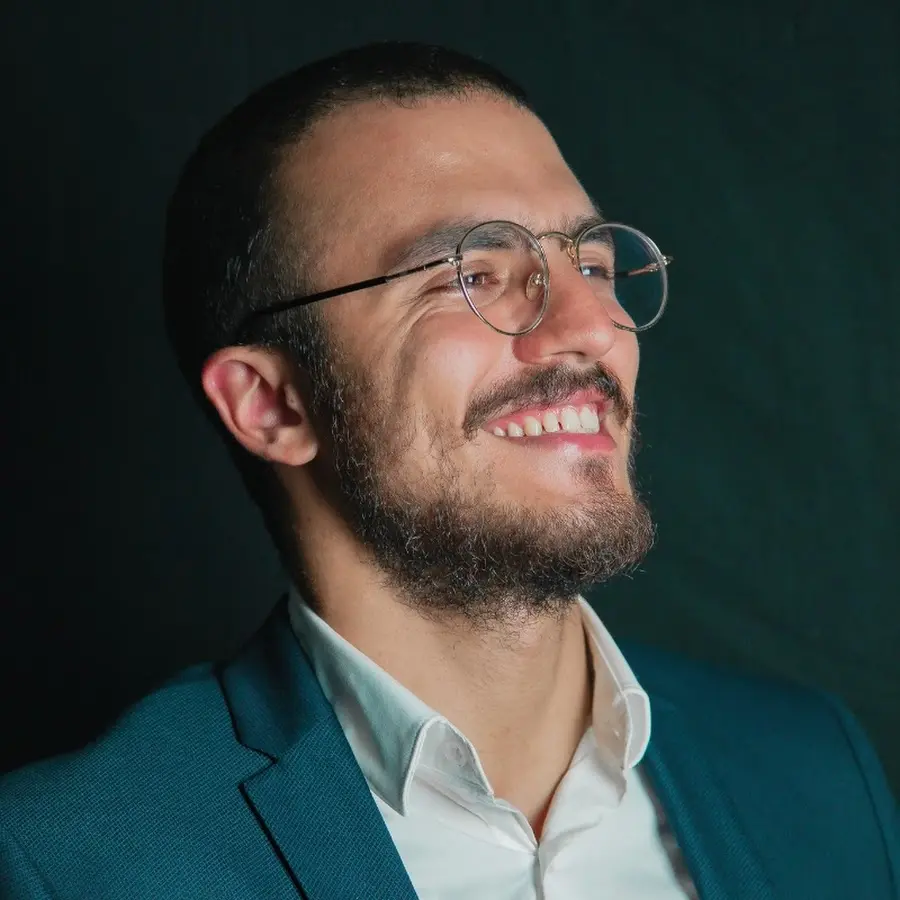
Dr Oussama Benchekroun
Médecine psychosomatique · Hypnose thérapeutique